
Oral Surgery in Rancho Mirage, CA
Personalized surgical care for damaged teeth, missing teeth, bone deficiencies, dental implants, and selected wisdom-tooth concerns.
Dr. Rod Strober combines careful diagnosis, three-dimensional planning, implant experience, and a patient-centered approach to determine the most appropriate treatment for your health and goals.
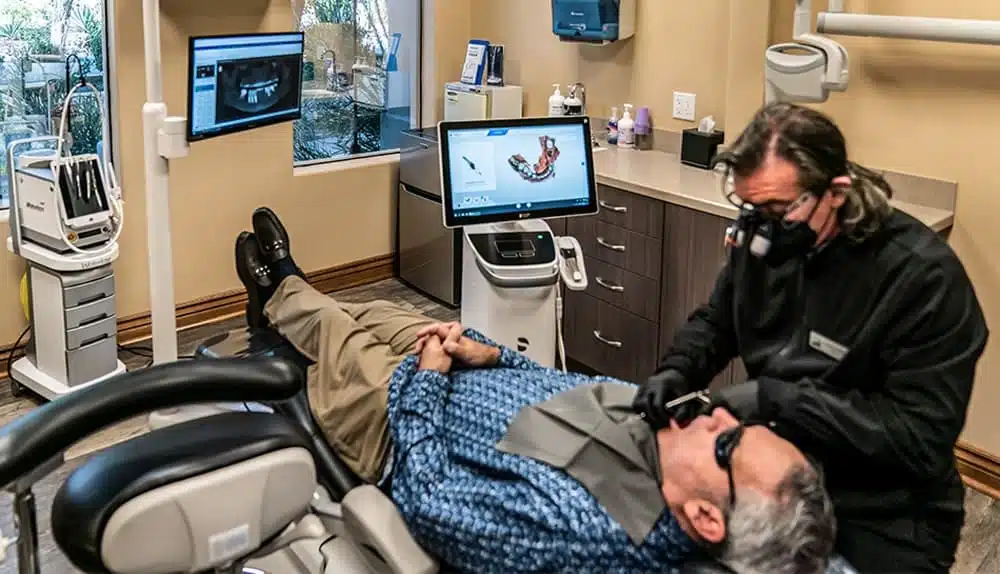
Surgery is recommended only when it serves a clear purpose.
Oral surgery includes procedures involving the teeth, gums, jawbone, and supporting tissues. It may be used to remove a tooth that cannot be predictably restored, rebuild deficient bone, place dental implants, or prepare the mouth for a new restoration.
The right treatment depends on your symptoms, medical history, anatomy, bone volume, gum health, remaining teeth, and long-term restorative plan.
Some procedures can be completed at Country Club Dentistry. When a case requires hospital-based treatment, deeper sedation, or specialist management, an appropriate referral may be recommended.
Treatment for teeth, bone, implants, and supporting tissues.
Every procedure begins with an examination and appropriate diagnostic imaging rather than a one-size-fits-all surgical recommendation.
Dental Extractions
Removal may be recommended when a tooth has extensive decay, fracture, infection, bone loss, or another condition that prevents predictable restoration.
Selected casesWisdom Tooth Evaluation
Third molars are evaluated for pain, infection, decay, gum disease, impaction, damage to neighboring teeth, and other current or foreseeable concerns.
Individual reviewS.M.A.R.T. Bone Grafting
Selected horizontal ridge deficiencies may be treated with a tunneling approach designed to add bone volume while limiting extensive flap elevation.
Bone augmentationDental Implant Placement
Implant surgery places an implant body within the jaw to support a planned crown, bridge, or implant-retained restoration after appropriate healing and integration.
Implant dentistryAll-on-X Implant Treatment
Four to six strategically planned implants may support a full-arch restoration for patients who are missing, or need to replace, most or all teeth in an arch.
Full-arch careImplant Site Preparation
Treatment may include extraction, grafting, tissue management, or other preparation needed to create a healthier foundation for the planned restoration.
Site developmentThe procedure should address a specific health or restorative need.
Symptoms alone do not determine treatment. Dr. Strober evaluates the source of the problem and whether a surgical or nonsurgical approach is appropriate.
Rebuilding selected bone deficiencies through a smaller-access approach.
S.M.A.R.T. stands for Subperiosteal Minimally Invasive Aesthetic Ridge Augmentation Technique. It is a tunneling approach used to augment selected areas of deficient jawbone.
Rather than lifting a large surgical flap, the technique creates a subperiosteal space through a smaller access point so grafting material can be delivered to the planned area.
Published case-series and human histology research describe bone formation with this technique. However, research remains more limited than it is for many conventional grafting methods, and results cannot be guaranteed for an individual patient.
Add horizontal ridge volume
Bone augmentation may create additional width for a planned implant or improve the contour of a deficient ridge.
Create a subperiosteal tunnel
A carefully developed pouch provides access to the treatment site without automatically requiring broad flap elevation.
Evaluate the defect in three dimensions
Bone width, height, neighboring anatomy, gum tissue, restorative goals, and implant position must be evaluated before treatment.
Not appropriate for every defect
Severe vertical loss, infection, complex anatomy, poor tissue conditions, or another clinical factor may require a different grafting method or specialist care.
“Minimally invasive” describes the surgical access—not a promise of no swelling, discomfort, sutures, complications, or recovery time. Individual healing varies.
Review the published S.M.A.R.T. case series ↗The treatment is planned around the future restoration.
Examination and three-dimensional imaging
Dr. Strober evaluates the ridge, nearby roots, sinuses, nerves, existing infection, gum tissue, and proposed implant location.
Select the grafting approach
The size and shape of the deficiency determine whether S.M.A.R.T., socket grafting, conventional augmentation, or another treatment is more appropriate.
Place the selected graft material
The surgical site is accessed, prepared, grafted, and closed according to the planned technique and the condition of the tissue.
Allow the grafted site to mature
Healing time varies according to the size of the graft, material, location, health factors, and whether implant placement occurs simultaneously or later.
Confirm readiness for the next phase
The area is reevaluated clinically and, when appropriate, radiographically before implant placement or restorative treatment.
Implant placement begins with the final tooth in mind.
Position, angle, bone support, gum tissue, bite forces, and the planned restoration are evaluated together.
Single-Tooth Implant
A dental implant can support an individual crown without requiring the adjacent teeth to anchor a conventional bridge.
Explore dental implants ↗Implant-Supported Bridge
Strategically placed implants may support a connected restoration when several neighboring teeth are missing.
Explore dental bridges ↗All-on-X Treatment
Four to six implants may support a provisional and later final full-arch restoration when clinical stability and anatomy allow.
Explore All-on-X ↗Immediate implant or provisional tooth placement is not appropriate for every patient.
The decision depends on infection, bone quality, implant stability, bite forces, grafting needs, systemic health, smoking, and the ability to protect the implants while they heal.
Removing a tooth is considered after its ability to be saved is evaluated.
When practical, the goal is to preserve healthy natural teeth. Extraction may become appropriate when retaining a tooth creates an ongoing health, structural, or restorative problem.
Extensive decay
The remaining tooth may be unable to support a dependable restoration.
Severe fracture
A crack may extend too deeply beneath the gum or compromise the root.
Persistent infection
The tooth may be unable to be treated predictably with restorative or endodontic care.
Advanced bone loss
Periodontal disease may leave the tooth without sufficient support.
Restorative planning
A failing tooth may need removal before an implant or full-arch restoration.
Third molars should be evaluated—not automatically removed.
Wisdom teeth may remain healthy and functional, or they may become impacted, difficult to clean, painful, infected, decayed, or harmful to nearby teeth and supporting tissues.
Examination and imaging help determine whether monitoring, treatment, extraction, or specialist referral is the most appropriate next step.
Preparation and follow-up matter as much as the procedure itself.
Your exact process will vary, but treatment follows a deliberate sequence from diagnosis through recovery.
Schedule an EvaluationDiscuss your symptoms and goals
Review your dental concerns, treatment priorities, health history, medications, and previous surgical experiences.
Examine the teeth and supporting tissues
Clinical findings and appropriate imaging are used to identify the condition and evaluate relevant anatomy.
Compare the available treatment options
Benefits, limitations, alternatives, timing, risks, costs, and the anticipated restorative sequence are reviewed.
Review preoperative instructions
Instructions may address medications, meals, transportation, hygiene, prescribed products, and preparation for recovery.
Complete the planned procedure
Local anesthesia and other comfort measures are selected according to the procedure and individual patient needs.
Follow instructions and attend follow-up
Healing is monitored and the next phase of implant or restorative treatment is coordinated when appropriate.
Recovery varies with the procedure, the treatment site, and your health.
- Temporary swelling or bruising
- Mild bleeding or blood-tinged saliva
- Tenderness at the surgical site
- Temporary jaw stiffness
- Dietary modifications
- Activity restrictions
- Instructions for cleaning the area
- A scheduled follow-up examination
- Bleeding that does not respond to the provided instructions
- Pain or swelling that becomes substantially worse
- Fever or signs of infection
- A reaction to prescribed medication
- Persistent numbness or altered sensation
- A loose implant component or restoration
- Difficulty maintaining hydration or nutrition
- Any symptom the team instructed you to report
Call 911 for difficulty breathing, difficulty swallowing, severe facial or neck swelling, uncontrolled bleeding, loss of consciousness, or another life-threatening emergency.

Surgical planning shaped by restorative experience.
Dr. Rod Strober has practiced dentistry since 1993 and has extensive experience in general, cosmetic, restorative, and implant dentistry.
His implant training and restorative background allow surgical decisions to be coordinated with the final tooth, bridge, denture, or full-arch restoration the procedure is intended to support.
He takes time to explain the diagnosis, alternatives, procedure, limitations, and expected recovery so patients can make an informed decision about their care.
Questions before scheduling a consultation?
Your examination is the best way to receive answers specific to your anatomy, health, diagnosis, and treatment options.
01 What oral surgery procedures does Country Club Dentistry offer?
Services may include selected tooth extractions, wisdom-tooth evaluation and treatment, dental implant placement, S.M.A.R.T. bone grafting, implant-site development, and All-on-X full-arch treatment.
02 Does every damaged tooth need to be extracted?
No. Dr. Strober first evaluates whether the tooth can be treated predictably with a filling, crown, root canal, periodontal care, or another restorative procedure. Extraction is considered when retaining the tooth is no longer a dependable option.
03 Do all wisdom teeth need to be removed?
No. Wisdom teeth may be monitored when they are healthy, functional, cleanable, and free of disease. Removal may be recommended when examination or imaging identifies pain, infection, decay, gum disease, impaction-related disease, or damage to nearby structures.
04 What is S.M.A.R.T. bone grafting?
S.M.A.R.T. stands for Subperiosteal Minimally Invasive Aesthetic Ridge Augmentation Technique. It uses a tunneling approach to place grafting material in selected horizontal ridge defects.
05 Is S.M.A.R.T. grafting appropriate for every bone defect?
No. Suitability depends on the size and shape of the defect, soft tissue, infection, nearby anatomy, restorative plan, and health factors. Some cases require a conventional grafting procedure or specialist management.
06 Can a dental implant be placed when the tooth is removed?
Immediate placement may be possible in selected cases. The decision depends on infection, remaining bone, implant stability, tissue condition, bite forces, grafting requirements, and the planned restoration.
07 Can I receive replacement teeth on the day of implant surgery?
Some qualifying implant and full-arch cases can receive a provisional restoration on the day of surgery. Immediate loading is not appropriate when implant stability, bone, bite, or another clinical factor does not support it.
08 Will oral surgery be painful?
Local anesthesia and appropriate comfort measures are used during treatment. Temporary soreness, swelling, bruising, and tenderness can occur afterward. The experience varies by procedure and patient.
09 How long does recovery take?
Recovery varies according to the procedure, treatment area, grafting, medical health, smoking, medications, and how closely postoperative instructions are followed. Dr. Strober will provide guidance specific to your treatment.
10 What are the risks of oral surgery?
Risks vary by procedure and may include pain, swelling, bleeding, infection, delayed healing, dry socket, damage to nearby teeth, sinus involvement, altered sensation, graft complications, or implant failure. Your individual risks will be reviewed before treatment.
11 When would I be referred to a specialist?
Referral may be recommended when anatomy, impaction, medical health, sedation needs, surgical complexity, pathology, or another clinical factor is better managed by an oral and maxillofacial surgeon or another specialist.
12 How do I schedule an oral surgery consultation?
Request an appointment online or call Country Club Dentistry at (760) 832-7915.
Patient Education Resources
This page provides general educational information and does not replace an examination, diagnosis, informed-consent discussion, or individualized surgical recommendation.
Suite A & B
Rancho Mirage, CA 92270
9:00 AM–5:00 PM
Understand the problem. Plan the right solution.
Meet with Dr. Rod Strober to discuss your symptoms, review your imaging, and determine whether oral surgery, restorative care, monitoring, or a specialist referral is the appropriate next step.