
Design the details. Keep the smile unmistakably yours.
Custom dental veneers can refine the visible color, shape, length, spacing, symmetry, and proportions of selected teeth. Dr. Rod Strober combines cosmetic planning, digital scanning, restorative precision, and individualized smile design at Country Club Dentistry.
Shape, shade, texture, and proportion are planned for your smile.
Scanning helps record tooth contours, alignment, and bite relationships.
Treatment is selected around existing enamel and long-term tooth health.
A thin restoration with a significant design responsibility.
Dental veneers are custom restorations bonded to the front surface of selected teeth. Unlike crowns, which cover most or all of a tooth, veneers are designed primarily for the visible facial surface.
Ceramic veneers can improve several cosmetic concerns at once, but the treatment should not be approached as a standardized set of identical teeth. Tooth structure, facial proportions, lip movement, gumline, existing dental work, bite forces, and personal preferences all influence the final design.
Explore Cosmetic Dentistry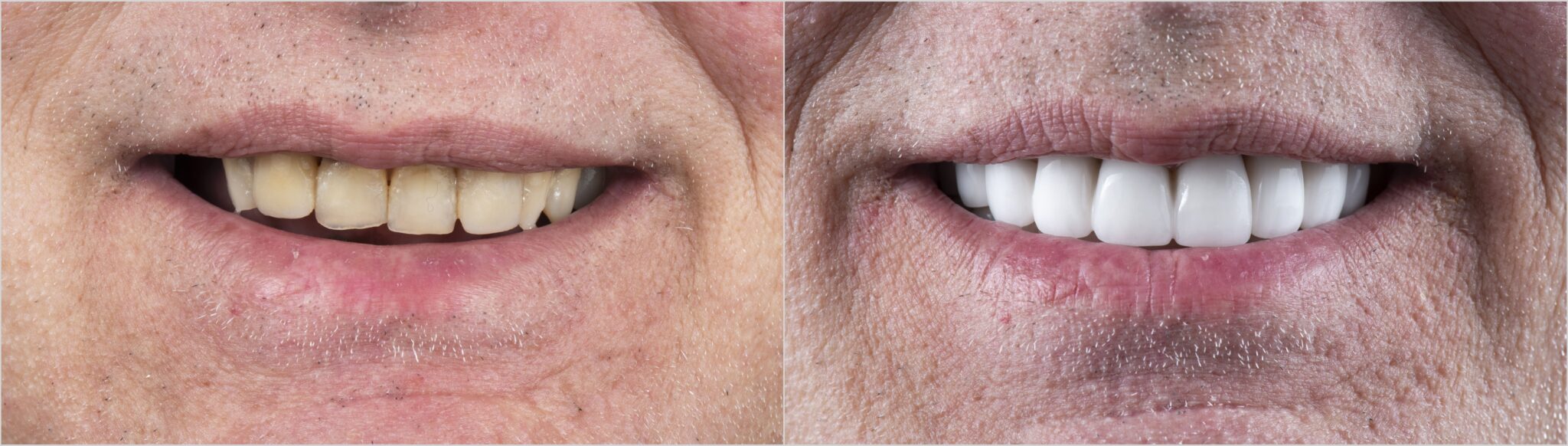
One treatment can refine several visible features of a tooth.
Veneers are intended for cosmetic and selected restorative concerns. They do not replace necessary treatment for decay, gum disease, significant fractures, or major bite problems.
Persistent discoloration
Veneers may mask internal staining, uneven color, or discoloration that does not respond predictably to professional whitening.
Chipped or worn edges
A veneer can restore selected areas of lost length or contour when the underlying tooth remains appropriate for conservative coverage.
Uneven tooth shapes
Narrow, short, pointed, asymmetrical, or irregularly shaped teeth may be redesigned to create more balanced proportions.
Selected gaps
Veneers can close certain small spaces by carefully modifying the width and contours of neighboring teeth.
Mild visual misalignment
In selected cases, veneers can create a straighter visual appearance. Teeth requiring significant movement may be better treated with orthodontics or clear aligners.
Inconsistent smile symmetry
Veneers may coordinate tooth length, width, edges, and visible surface contours across the smile.
Clinical skill, digital information, and final-detail photography.
The veneer process combines direct clinical care with digital records and detailed evaluation of the completed smile.
Three-dimensional scanning records the existing smile.
Digital scanning can capture tooth contours, spacing, alignment, existing restorations, and bite relationships without relying exclusively on traditional impression material.
The scan becomes part of the planning process used to evaluate available space and communicate the intended restoration design.
Explore Our TechnologyAfter photography records the completed result.
Final photography allows the tooth color, symmetry, visible edge position, surface reflection, and relationship to the lips and surrounding face to be evaluated.
It also creates an accurate visual record for comparison and continued restorative monitoring.
View the Smile GalleryVeneers can coordinate multiple cosmetic changes in one treatment plan.
Individual shade control
Ceramic shade, translucency, surface texture, and light reflection can be selected to coordinate with surrounding teeth and skin tone.
Customized proportions
Veneers can modify the visible width, length, edge position, and contour of selected teeth.
Multiple concerns addressed
Shape, color, chips, small spaces, and limited visual misalignment can sometimes be managed within one coordinated plan.
Natural surface character
Modern ceramics can be designed with subtle texture, translucency, and contour rather than a flat or uniform appearance.
Stain-resistant ceramic
Ceramic veneers generally resist external staining better than direct composite materials, although margins and natural teeth still require care.
Long-term restorative potential
Veneers can provide years of service when appropriately planned, bonded, protected from excessive force, and professionally maintained.
The visible concern is only one part of the decision.
- The teeth and gums are healthy or have been stabilized
- There is sufficient enamel for predictable bonding
- The cosmetic concerns involve selected visible surfaces
- The existing bite can support the planned restorations
- The patient understands that treatment is not reversible
- Daily home care and professional maintenance are a priority
- Active decay or gum disease is present
- A tooth has a large fracture or insufficient structure
- Significant tooth movement is required
- Grinding or clenching cannot be adequately controlled
- The bite places excessive pressure on the veneer area
- A crown or another restoration would provide needed coverage
Design begins before any tooth preparation.
The number of appointments and treatment timeline depend on the number of teeth, existing dental conditions, restoration material, laboratory process, temporary restorations, and whether other treatment is needed first.
Schedule Your EvaluationCosmetic consultation
Dr. Strober discusses what you notice about your smile, what you would like to change, and what type of result feels appropriate.
Dental and bite examination
Teeth, gums, existing restorations, enamel, tooth position, bite forces, facial proportions, and smile movement are evaluated.
Digital scanning and photography
Digital records help document tooth contours, alignment, available space, shade, smile line, and the relationship between the teeth and face.
Smile and restoration design
Shape, length, width, shade, texture, edge position, and treatment sequence are selected according to the individual case.
Conservative tooth preparation
A controlled amount of enamel is removed when necessary to create restorative space and a suitable bonding surface.
Temporary veneers when indicated
Temporary restorations may protect prepared teeth and allow the proposed contours to be evaluated while the final veneers are created.
Trial evaluation and bonding
The veneers are evaluated for fit, shade, contour, contact, and relationship to the smile before being bonded to the teeth.
Bite check and final polish
Contacts and bite forces are checked, excess bonding material is removed, and the veneer margins and surfaces are finished.
Veneers are one option—not the automatic answer for every smile.
The most conservative treatment capable of meeting the health, functional, and cosmetic goals should be considered first.
Porcelain Veneers
Considered when selected teeth need a coordinated change in color, shape, proportion, surface, or limited visual alignment.
Current treatmentDental Bonding
Often suitable for a small chip, localized contour change, uneven edge, or minor space requiring a direct repair.
Explore bonding ↗ 03BioClear
Uses clear matrices and warmed composite to reshape teeth, close black triangles, and improve selected gaps or contours.
Explore BioClear ↗ 04Professional Whitening
May be preferable when the primary concern is generalized staining and the natural tooth shape and position are already satisfactory.
Explore whitening ↗ 05SureSmile® Clear Aligners
Move teeth rather than covering their visible surfaces and may be recommended when alignment or spacing requires actual repositioning.
Explore aligners ↗ 06CEREC Dental Crowns
May be recommended when a tooth requires more extensive protection because of a fracture, large restoration, or structural weakness.
Explore crowns ↗The transformation should still belong to the person wearing it.
Veneer treatment can create a meaningful change in tooth color, proportion, symmetry, spacing, and visible surface character.
The before-and-after image is displayed at its original wide proportion without cropping, enlarging, or placing text over the teeth. Individual treatment needs and results vary.
Plan Your Smile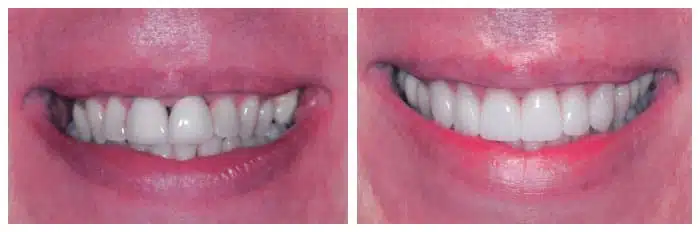
Long-term performance depends on more than the ceramic itself.
Ceramic veneers can provide long-term service, but no veneer can be promised to last for a specific number of years. Enamel bonding, restoration design, bite forces, grinding, oral hygiene, diet, smoking, trauma, and maintenance can all influence longevity.
Request an AppointmentBrush with fluoride toothpaste
Natural tooth structure remains beneath and around a veneer and can still develop decay.
Clean between the teeth daily
Flossing or another recommended interdental method helps protect veneer margins and surrounding gum health.
Avoid biting hard objects
Ice, pens, fingernails, hard candy, and packaging can damage veneers as well as natural teeth.
Protect against grinding
A nightguard may be recommended when grinding or clenching places repeated pressure on the veneers.
Report changes promptly
Contact the office if a veneer feels loose, the bite changes, a margin feels rough, or sensitivity develops.
Maintain regular dental visits
Routine examinations help monitor veneer margins, gum health, underlying tooth structure, bite forces, and surrounding teeth.

Veneer design requires restorative judgment and an artistic eye.
Dr. Rod Strober has practiced dentistry since 1993 and brings decades of cosmetic, restorative, and implant dentistry experience to Country Club Dentistry.
His veneer planning considers tooth health, enamel preservation, facial proportions, gumline, lip movement, bite forces, shade, translucency, surface texture, and how the restored teeth relate to the rest of the smile.
Suite A & B
Rancho Mirage, CA 92270
9:00 AM–5:00 PM
Questions before changing your smile?
These answers provide general education. An examination is required to determine whether veneers are appropriate for your teeth, gums, bite, and cosmetic goals.
01 What are dental veneers?
Dental veneers are custom restorations bonded to the front surface of selected teeth. They can improve visible tooth color, shape, length, proportion, spacing, symmetry, and selected areas of wear.
02 What cosmetic concerns can veneers address?
Veneers may improve persistent discoloration, chips, worn edges, uneven shapes, selected gaps, small teeth, asymmetry, and mild visual misalignment. They are not a substitute for treating decay, gum disease, major fractures, or significant orthodontic problems.
03 Are dental veneers permanent?
Veneer treatment is generally considered irreversible because enamel is commonly removed to create space and prepare the tooth for bonding. Veneers may eventually require repair or replacement.
04 Are dental veneers the same as porcelain veneers?
Dental veneer is a broad term. Veneers may be made from ceramic materials or direct composite resin. Porcelain veneer is commonly used to describe a laboratory-made ceramic veneer.
05 How much enamel is removed for veneers?
The amount varies according to tooth position, existing shape, shade, restoration design, material thickness, and available space. Some cases require minimal preparation, while others require more extensive reshaping.
06 Is getting veneers painful?
Local anesthesia may be used during tooth preparation. Temporary sensitivity or gum tenderness can occur after treatment. Comfort and recovery vary according to the number of teeth and amount of preparation required.
07 How long does the veneer process take?
The timeline varies. Treatment may include consultation, digital records, smile planning, preparation, temporary veneers, laboratory fabrication, trial evaluation, bonding, and follow-up. Some cases require additional dental treatment before veneers can begin.
08 How long do dental veneers last?
Ceramic veneers can provide long-term service, but no exact lifespan is guaranteed. Longevity depends on enamel bonding, material, restoration design, bite forces, grinding, oral hygiene, smoking, diet, trauma, and continuing dental care.
09 Can veneers stain?
Ceramic surfaces are generally more stain resistant than direct composite resin. Natural teeth, bonding margins, and surrounding dental materials can still discolor or change over time.
10 Can veneers fix crooked teeth?
Veneers can create a straighter visual appearance in selected mild cases by changing visible tooth contours. Teeth requiring significant movement may be better treated with clear aligners or another orthodontic approach.
11 Can I get veneers if I grind my teeth?
Grinding and clenching can increase veneer fracture or debonding risk. The bite must be evaluated, and a protective nightguard or another treatment may be recommended.
12 What happens if a veneer chips or feels loose?
Contact the dental office promptly. Depending on the condition, the veneer may be polished, repaired, re-bonded, or replaced. The underlying tooth and bite should also be evaluated.
13 How do I schedule a veneer consultation?
Request an appointment online or call Country Club Dentistry at (760) 832-7915 to schedule a cosmetic consultation with Dr. Rod Strober.
Patient Education Sources
Treatment recommendations require an examination with a licensed dentist. Educational information on this page is informed by established professional and peer-reviewed resources.
Refine the smile. Preserve the person behind it.
Schedule a dental veneer consultation with Dr. Rod Strober to compare ceramic veneers, BioClear, bonding, whitening, clear aligners, and other personalized cosmetic options.