
Refine the details. Keep the smile yours.
Dental bonding uses tooth-colored composite resin to repair minor chips, soften uneven edges, close select small gaps, and improve the shape of teeth with a conservative cosmetic approach.
Composite is shaped directly on the tooth.
Many cases require little or no enamel removal.
Material is selected to blend with nearby teeth.
Patient education from the American Dental Association.
A direct cosmetic repair shaped around the individual tooth.
Dental bonding is a cosmetic and restorative technique that uses tooth-colored composite resin. The material is applied directly to a tooth, carefully shaped, hardened with a curing light, and polished to blend with the surrounding enamel.
Because the restoration is created directly in the mouth, bonding can often be completed more efficiently than laboratory-fabricated treatments. It is particularly useful when the concern is limited to a small area and the tooth does not require the greater strength or coverage of a veneer or crown.
Explore Cosmetic DentistrySmall imperfections can have a noticeable effect on the entire smile.
Bonding is best suited to focused cosmetic changes. Larger fractures, extensive wear, significant discoloration, or bite-related damage may require another treatment.
Minor chips
Composite resin can rebuild a small chipped area and restore a smoother, more natural-looking tooth edge.
Small spaces
Bonding can add width to select teeth and reduce the appearance of a small gap when orthodontic movement is not required.
Uneven tooth edges
Composite can refine uneven contours and create a more balanced line across the visible teeth.
Small or misshapen teeth
Bonding may improve the visible proportions of a tooth that appears narrow, short, pointed, or irregularly shaped.
Localized discoloration
In appropriate cases, composite can cover a small discolored area that does not respond predictably to whitening.
A focused treatment for patients who do not need a full cosmetic restoration.
Conservative preparation
Many bonding cases require little or no removal of healthy enamel, although preparation depends on the tooth and treatment goal.
Direct application
The composite is shaped directly on the tooth rather than being fabricated by an outside dental laboratory.
Natural color matching
Composite is available in different shades and translucencies to help it blend with surrounding enamel.
Repairable material
Depending on the condition of the restoration, worn or chipped composite may sometimes be repaired or refreshed.
Efficient treatment
Many focused bonding treatments can be completed in one visit, though appointment length varies by case.
Personalized design
Shape, contour, shade, texture, and polish are adjusted to the individual tooth and surrounding smile.
Built directly on the tooth, then refined by hand.
Dental bonding is both technical and artistic. The composite must adhere securely while also matching the shape, shade, surface texture, and light reflection of natural enamel.
Schedule Your EvaluationEvaluate
Dr. Strober examines the tooth, nearby enamel, bite forces, gum health, and the cause of the cosmetic concern.
Select the shade
A composite color is selected to coordinate with the surrounding natural teeth.
Prepare the surface
The tooth is cleaned and conditioned. Limited reshaping may be needed when damaged enamel or old material is present.
Shape the composite
Resin is placed in controlled layers and sculpted to rebuild the missing or uneven portion of the tooth.
Cure and polish
The material is hardened, refined, bite-checked, textured, and polished for a smooth finish.
A precise change without overpowering the natural smile.
Bonding can create a meaningful improvement when the concern is small and the surrounding teeth are healthy. The treatment is designed to blend rather than draw attention to the restored area.
Individual results vary. The example shown is presented at its original wide proportion without enlarging or cropping the teeth.
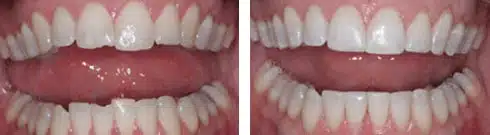
Bonding is valuable because it is conservative—not because it replaces every other treatment.
- The chip or cosmetic concern is relatively small
- The tooth has enough healthy structure remaining
- The bite does not place excessive force on the bonded area
- A conservative direct restoration can meet the goal
- The patient understands that maintenance may be needed
- The tooth has a large fracture or extensive structural damage
- The restoration must withstand heavy biting forces
- Several teeth require a major change in color or proportion
- There is active decay, gum disease, or an untreated bite issue
- Longer-term stain resistance or ceramic strength is a priority
Bonding, BioClear, veneers, and crowns solve different problems.
Traditional Dental Bonding
Often considered for minor chips, small gaps, uneven edges, and limited cosmetic reshaping.
Current Page 02BioClear
Uses clear matrices and warmed composite to create more extensive wraparound contours, including treatment for black triangles.
Explore BioClear ↗ 03Porcelain Veneers
May be recommended when several teeth need a broader change in shade, shape, proportion, or symmetry.
Explore Veneers ↗ 04CEREC Dental Crowns
Provide greater coverage and structural support when a tooth is substantially weakened, cracked, or heavily restored.
Explore Crowns ↗Protect the polish, the margin, and the tooth underneath.
The lifespan of dental bonding varies. Its condition is influenced by the size and location of the restoration, bite pressure, grinding or clenching, oral hygiene, diet, and personal habits.
Request an AppointmentBrush and floss consistently
Keep the bonded tooth, gumline, and neighboring teeth clean to reduce plaque and staining.
Avoid biting hard objects
Ice, pens, fingernails, hard candy, and packaging can chip both composite and natural enamel.
Address grinding or clenching
Excessive bite pressure can increase wear or fracture risk. A protective appliance may be recommended.
Expect normal maintenance
Composite can lose polish, stain, wear, or chip over time and may eventually need refinishing, repair, or replacement.
Keep routine dental visits
Regular examinations allow the bonded area, bite, gum health, and underlying tooth to be monitored.
The most conservative treatment is the one that properly solves the problem.
Dental bonding may be appropriate when your concern is relatively small, the tooth is healthy enough to support the restoration, and your bite will not place excessive force on the repaired area.
Before recommending bonding, Dr. Strober evaluates the cause and extent of the damage. A tooth that appears to have a minor chip may also have an underlying crack, decay, bite imbalance, or structural weakness that requires a different treatment.

Bonding is a small restoration that demands careful detail.
Dr. Rod Strober has practiced dentistry since 1993 and brings decades of cosmetic, restorative, and implant dentistry experience to Country Club Dentistry.
Dental bonding requires more than placing tooth-colored material. The final contour must complement the surrounding teeth, support the bite, meet the gumline cleanly, and reflect light in a way that looks natural.
Suite A & B
Rancho Mirage, CA 92270
9:00 AM–5:00 PM
Questions about composite bonding?
These answers provide general patient education. Your examination will determine whether bonding is appropriate for your tooth.
01 What is dental bonding?
Dental bonding is a direct treatment that uses tooth-colored composite resin to repair or reshape part of a tooth. The material is applied, sculpted, hardened, refined, and polished during the appointment.
02 What problems can dental bonding fix?
Bonding may improve minor chips, small spaces, uneven edges, localized discoloration, and teeth that appear slightly small or misshapen. Larger or structurally compromised teeth may require another treatment.
03 Is dental bonding completed in one visit?
Many dental bonding procedures can be completed in one visit because the restoration is created directly on the tooth. Appointment length depends on the number of teeth and complexity of treatment.
04 Does dental bonding require enamel removal?
Many cosmetic bonding cases require little or no removal of healthy enamel. Some preparation may be necessary when damaged tooth structure, decay, an old restoration, or bite-related concerns are present.
05 Is dental bonding reversible?
Bonding is often more conservative than veneers or crowns, but it should not automatically be described as completely reversible. The answer depends on whether tooth preparation was required and the condition of the enamel underneath.
06 How long does dental bonding last?
Longevity varies according to the size and location of the restoration, bite pressure, grinding, oral hygiene, diet, and habits. Bonding may eventually require polishing, repair, or replacement.
07 Can dental bonding stain?
Composite resin can stain or lose surface polish over time. Coffee, tea, red wine, tobacco, and other strongly pigmented substances may affect its appearance.
08 Does dental bonding material contain BPA?
Resin composition varies by manufacturer and product. Some dental composites use bisphenol-A-derived monomers. The American Dental Association reports that potential BPA release from dental restorations is considered minor compared with typical background exposure. Patients with material concerns should discuss the specific product selected with their dentist.
09 What is the difference between dental bonding and BioClear?
Traditional bonding is commonly layered and shaped directly onto a focused area. BioClear uses clear matrices and warmed composite to create a more extensive molded contour around the tooth. The better option depends on the tooth and treatment goal.
10 How do I schedule a dental bonding consultation?
Request an appointment online or call Country Club Dentistry at (760) 832-7915 to schedule an evaluation with Dr. Rod Strober.
Patient Education Sources
Treatment recommendations require an examination with a licensed dentist. Educational information on this page is informed by established dental resources.
A subtle repair can change the way you feel about your smile.
Schedule a dental bonding consultation with Dr. Rod Strober to learn whether composite bonding, BioClear, veneers, or another cosmetic option is best for your tooth.